A new book by Keith Vest
The ache to make isn't a hobby. It's a homing instinct.
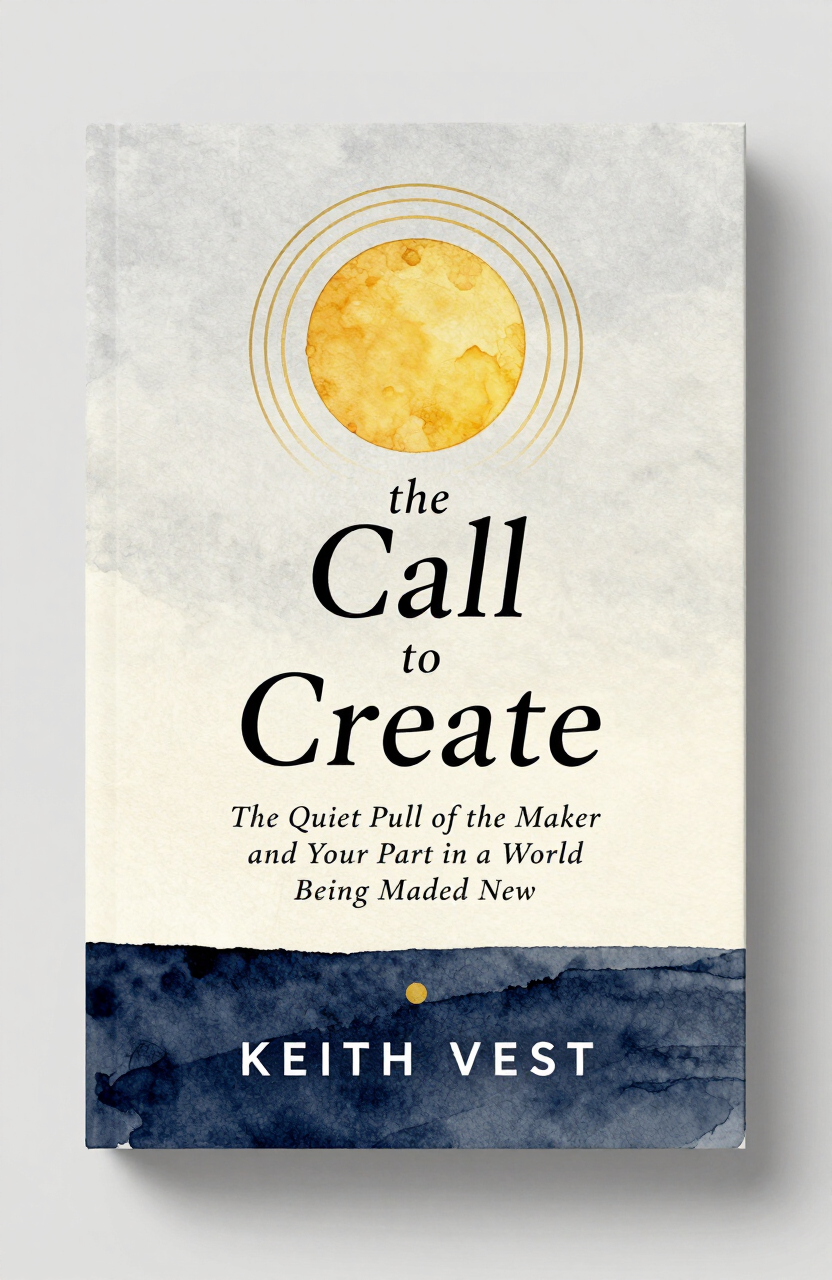
The quiet pull of the Maker and your part in a world being made new. A workshop-floor conversation about what creating actually is, why we flinch at calling ourselves creative, and what becomes possible when we stop performing and start abiding.
The premise
You know the feeling. The idea you've been carrying for months. The thing you keep telling yourself you'll start. You are not uncreative. You are out of practice.
But what if the ache to make is coming from somewhere outside of you — and it is exactly what you were made to do? In The Call to Create, agency founder Keith Vest argues that the persistent inner pull to make things is not a hobby. It is a homing instinct, pointing back toward whose image you carry and whose work you join every time you build, write, paint, or code.
The author
Thirty years of making things for a living.
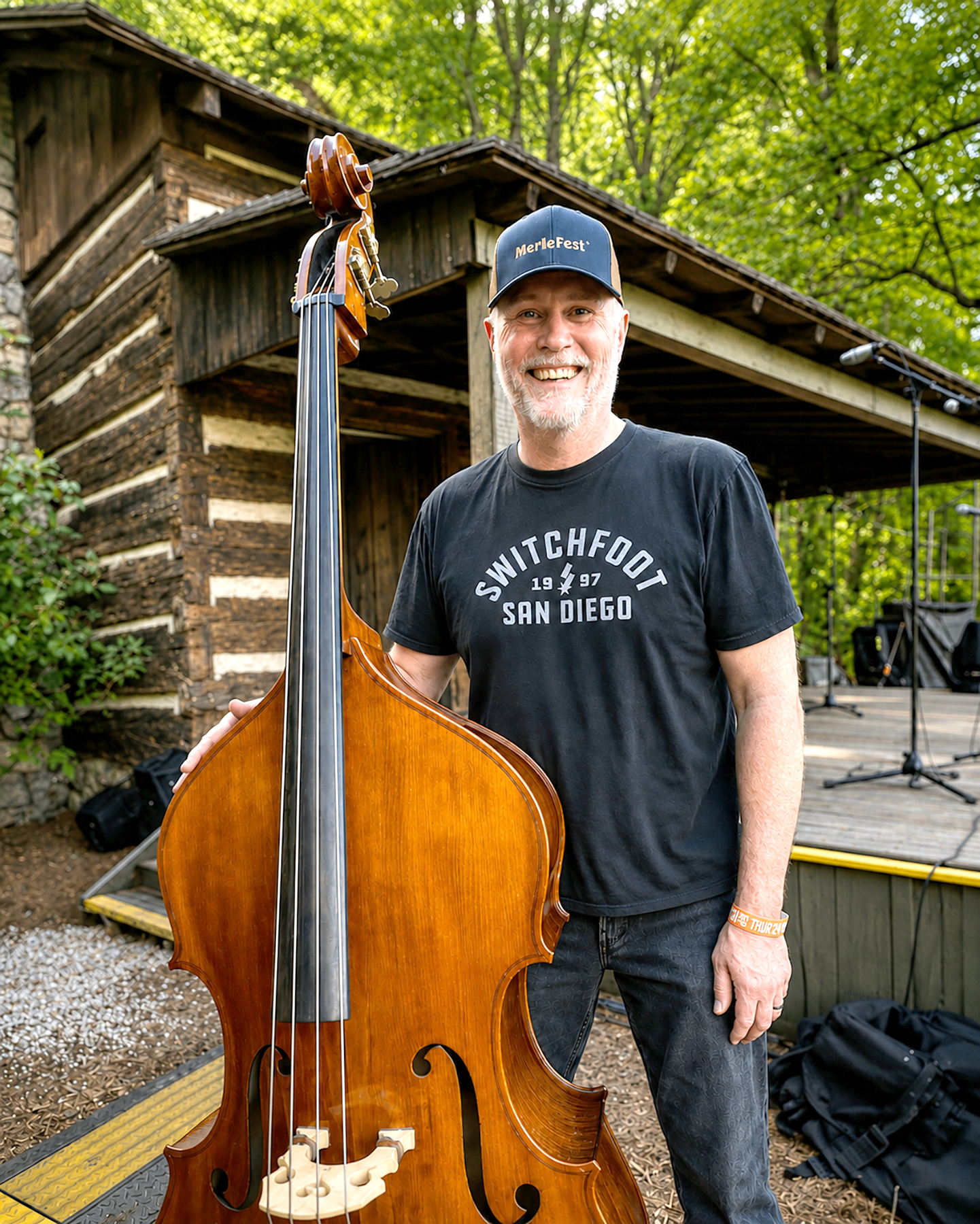
Keith is a designer and creative leader who co-founded The Variable, a creative agency in Winston-Salem. At fifty-five he took up the upright bass. He is still not very good at it, and he keeps going back to jam camps in the Carolina mountains anyway.
The book
the Call to Create
The Quiet Pull of the Maker and Your Part in a World Being Made New
You know the feeling. The idea you've been carrying for months. The thing you keep telling yourself you'll start. We blame it on restlessness, on time we can't find. We open the app instead.
But what if the ache to make is coming from somewhere outside of you — and it is exactly what you were made to do? Keith Vest argues that the persistent inner pull to make is not a hobby. It is a homing instinct, pointing back toward whose image you carry and whose work you join every time you build, write, paint, or code.
With the candor of a workshop floor, Vest explores what creating actually is, why we flinch at calling ourselves creative, and what becomes possible when we stop performing and start abiding. Drawing from studios and boardrooms — from Bonhoeffer's prison letters to a bluegrass jam camp in the Carolina mountains — he invites you into the work that has been waiting for you all along.
What's inside
01
The ache, named
Why the pull to make keeps returning even after you have talked yourself out of it, and where it comes from.
02
The flinch
What happens in a room when you ask who is creative — and why the word, not the work, is the problem.
03
Performing vs. abiding
The difference between making to be seen and making because you belong to the work.
04
The assignment
Your part in a world being made new: ordinary, specific, and already in your hands.
The Call to Create
Sources
The Quiet Pull of the Maker and Your Part in a World Being Made New
Sources are listed by chapter and each chapter list is self-contained. Where a source supports a specific claim in the text, a brief note indicates what it documents. Front matter is excluded and URLs for web sources are omitted for stability.
01
The Haunting Is Holy
Flaherty, Alice W. “Frontotemporal and Dopaminergic Control of Idea Generation and Creative Drive.” Journal of Comparative Neurology 493, no. 1 (2005): 147–153.
Flaherty, Alice W. The Midnight Disease: The Drive to Write, Writer’s Block, and the Creative Brain. Boston: Houghton Mifflin, 2004. Source for the neuroscience of creative drive and Flaherty’s account of her own compulsive writing; the paraphrase on biological origins deepening rather than diminishing the mystery of creativity is drawn from Chapter 7.
02
The Consumption Coma
Csikszentmihalyi, Mihaly. Beyond Boredom and Anxiety: Experiencing Flow in Work and Play. San Francisco: Jossey-Bass, 1975. First published presentation of flow theory.
Csikszentmihalyi, Mihaly. Finding Flow: The Psychology of Engagement with Everyday Life. New York: Basic Books, 1997. Documents that flow-producing situations occurred more than three times as often during work as during leisure.
Csikszentmihalyi, Mihaly. Flow: The Psychology of Optimal Experience. New York: Harper & Row, 1990. Source for the finding that the best moments occur when body or mind is stretched to its limits in voluntary effort.
Csikszentmihalyi, Mihaly, and Judith LeFevre. “Optimal Experience in Work and Leisure.” Journal of Personality and Social Psychology 56 (1989): 815–822. Landmark study documenting flow 54 percent of the time at work versus 18 percent during leisure, and the “paradox of work.”
Proverbs 16:9 (NLV): “The mind of a man plans his way, but the Lord shows him what to do.” The chapter paraphrases rather than quotes this verse.
03
The Reverence Deficit
Britannica. “How a Rejected Block of Marble Became the World’s Most Famous Statue.” Source for the failed attempts of Agostino di Duccio and Antonio Rossellino, and Michelangelo’s 1501 commission.
Condivi, Ascanio. The Life of Michelangelo, 1553. Contemporary biography documenting Michelangelo’s working methods, including sleeping in his boots and sculpting in the rain.
DataReportal. Digital 2024 Global Overview Report. Source for global and U.S. average screen-time figures (roughly seven hours per day).
Fujimura, Makoto. Culture Care: Reconnecting with Beauty for Our Common Life. Downers Grove, IL: IVP Books, 2017. Source for the argument that culture is a garden to be cultivated rather than a territory to be won or lost.
Galleria dell’Accademia di Firenze. Official documentation on the David, including the Vestry Board unveiling in January 1504 and the public unveiling on September 8, 1504.
History.com. “Michelangelo’s Statue of David Is Unveiled to the Public.” Source for the commission, the review committee including Leonardo da Vinci and Sandro Botticelli, and the move to the Piazza della Signoria.
Vasari, Giorgio. Lives of the Most Excellent Painters, Sculptors, and Architects, 1568 Giuntina edition. Contemporary account of the David’s perfection and its transport through Florence.
04
The God Who Made a Platypus
Alter, Robert. The Hebrew Bible: A Translation with Commentary. New York: W. W. Norton, 2019. Source for the analysis of tov.
Atala, Tony. Interview by Keith Vest, December 2025. Personal interview conducted via video call.
George, Stephen C. “When Scientists Believed the Adorable Platypus Was a Hoax.” Discover Magazine, August 29, 2023.
Heaney, Jessica. “Why 19th-Century Naturalists Didn’t Believe in the Platypus.” Atlas Obscura. Source for George Shaw’s scissor examination and Robert Knox’s “freak imposture” declaration.
Shaw, George. The Naturalist’s Miscellany. 1799. First scientific description of the platypus (Platypus anatinus).
05
The First Cultivator
Alexander, Christopher. The Timeless Way of Building. New York: Oxford University Press, 1979. Source for “the quality without a name” and for the argument that a building’s living quality emerges through time, use, and ongoing repair rather than being designed in advance.
Alter, Robert. The Hebrew Bible: A Translation with Commentary. New York: W. W. Norton, 2019. Translation and commentary on the Genesis 2 naming passages.
Angelou, Maya. “Nothing will work unless you do.” Widely attributed; original source unconfirmed.
Brown, Francis, S. R. Driver, and Charles A. Briggs. The Brown-Driver-Briggs Hebrew and English Lexicon. Peabody, MA: Hendrickson, 1906. Lexical source for abad and shamar.
Buechner, Frederick. Wishful Thinking: A Theological ABC. New York: Harper & Row, 1973.
Bundles, A’Lelia. On Her Own Ground: The Life and Times of Madam C. J. Walker. New York: Washington Square Press, 2001.
Crouch, Andy. Culture Making: Recovering Our Creative Calling. Downers Grove, IL: IVP Books, 2008. Framework for cultivation versus conquest in creative work.
Dyson, James. Against the Odds: An Autobiography. London: Orion, 1997.
Dyson, James. “James Dyson Found Success on His 5,128th Try.” Interview by Dan Bova. How Success Happens, November 2025. Source for the remark, “You’re in pursuit of something.”
Dyson, James. “James Dyson on Using Failure to Drive Success.” Entrepreneur, August 2025. Source for the remark, “You never learn from success, but you do learn from failure.”
Genesis 2:15 (NIV): “The LORD God took the man and put him in the Garden of Eden to work it and take care of it.” Hebrew: abad (to work, labor, serve) and shamar (to keep, guard, tend).
Genesis 3:17–18 (ESV): “Cursed is the ground because of you; in pain you shall eat of it all the days of your life; thorns and thistles it shall bring forth for you…” Source for the claim that the fall introduced futility rather than work.
Keller, Timothy. Every Good Endeavor: Connecting Your Work to God’s Work. New York: Penguin, 2012. Source for a theology of work and cultivation as pre-fall vocation.
Koehn, Nancy F. “Madam C. J. Walker: Entrepreneur, Leader, and Philanthropist.” Harvard Business School Case 807-145, revised April 2007.
Michals, Debra. “Madam C. J. Walker.” National Women’s History Museum, 2015.
Sayers, Dorothy L. The Mind of the Maker. London: Methuen, 1941. Argues that human creativity reflects the image of a creating God and that suppressing creative work is a form of theological failure.
Sayers, Dorothy L. “Why Work?” In Letters to a Diminished Church: Passionate Arguments for the Relevance of Christian Doctrine. Nashville: Thomas Nelson, 2004.
Sayers, Dorothy L. “The Other Six Deadly Sins.” In Creed or Chaos? and Other Essays in Popular Theology. London: Methuen, 1947.
06
Naming Is Power
Alter, Robert. The Hebrew Bible: A Translation with Commentary. New York: W. W. Norton, 2019. Source for the analysis of shēm.
Genesis 2:19 (NIV): “Now the LORD God had formed out of the ground all the wild animals and all the birds in the sky. He brought them to the man to see what he would name them…” Source for naming as the second creative assignment.
Genesis 17:5 (NIV): Abram renamed Abraham.
Genesis 32:28 (NIV): Jacob renamed Israel.
Hunt, John. The Ascent of Everest. London: Hodder & Stoughton, 1953. Account of the 1953 expedition, including the coded dispatch to London.
Keller, Timothy. Every Good Endeavor: Connecting Your Work to God’s Work. New York: Penguin, 2012.
Maslow, Abraham H. “A Theory of Human Motivation.” Psychological Review 50, no. 4 (1943): 370–396.
Morris, Jan. Coronation Everest. London: Faber & Faber, 1958.
Sayers, Dorothy L. The Mind of the Maker. London: Methuen, 1941. Source for the theology of naming as a reflection of divine creative nature.
07
“I’m Not Creative” and Other Lies You Believe
Ephesians 2:10 (ESV): “For we are his workmanship, created in Christ Jesus for good works, which God prepared beforehand, that we should walk in them.”
Exodus 3 (ESV): The burning bush and Moses’s commission. Moses’s age is stated at Exodus 7:7, not in Exodus 3.
Exodus 7:7 (ESV): “Now Moses was eighty years old, and Aaron eighty-three years old, when they spoke to Pharaoh.”
Genesis 1:27 (ESV): “So God created man in his own image, in the image of God he created him; male and female he created them.”
Genesis 12:4 (ESV): “So Abram went, as the LORD had told him, and Lot went with him. Abram was seventy-five years old when he departed from Haran.”
Joshua 3 (ESV): Israel’s crossing of the Jordan at flood stage, the waters parting after the priests’ feet entered the river.
Lamott, Anne. Bird by Bird: Some Instructions on Writing and Life. New York: Anchor Books, 1994. Source for the “first drafts” discussion (original term softened here).
Land, George. “The Failure of Success.” TEDxTucson, 2011.
Land, George, and Beth Jarman. Breakpoint and Beyond: Mastering the Future Today. New York: HarperBusiness, 1992. Source for the divergent-thinking study of children and adults.
Michelangelo Buonarroti. “If people knew how hard I worked to get my mastery, it wouldn’t seem so wonderful at all.” Primary source uncertain; widely attributed via Giorgio Vasari’s biography and later quotation collections.
Romans 12:6 (ESV): “Having gifts that differ according to the grace given to us, let us use them…”
08
The Holy Envy
Beatles Bible. “6 July 1957: John Lennon Meets Paul McCartney.” Details on the Quarrymen’s performance at St. Peter’s Church, Woolton, and the Lennon-McCartney introduction.
The Holy Bible, English Standard Version. Wheaton, IL: Crossway, 2001. (1 Corinthians 13:4; Galatians 5:19–21; James 3:16; Proverbs 14:30; Romans 12:6.)
“Holy envy”: The phrase originates with biblical scholar Krister Stendahl (1921–2008), dean of Harvard Divinity School and later Lutheran bishop of Stockholm, as the third of his three rules of religious understanding (“Leave room for holy envy”), articulated in 1985. It was developed at book length by Barbara Brown Taylor (cited below). This chapter borrows the term and adapts it to creative jealousy; that application is the author’s own.
Leslie, Ian. John & Paul: A Love Story in Songs. New York: Celadon Books, 2025. Dual biography tracing the Lennon-McCartney partnership through their songwriting.
McCartney, Paul. “Here Today.” Interview. McCartney: A Life in Lyrics. iHeartPodcasts and Pushkin Industries, December 6, 2023. McCartney describes the reconciliation with Lennon and writing “Here Today” after his death.
McCartney, Paul. Interview by Joan Goodman. Playboy, December 1984. McCartney confirms the lines in “Too Many People” were aimed at Lennon.
McCartney, Paul. The Lyrics: 1956 to the Present. Edited by Paul Muldoon. New York: Liveright, 2021. Source for McCartney’s reflections on writing in competition with Lennon.
National Museums Liverpool. “When Paul McCartney Met John Lennon.”
Norman, Philip. John Lennon: The Life. New York: Ecco, 2008.
Parade. “Paul McCartney Reflects on ‘Super Painful’ Reconciliation with John Lennon.” December 6, 2023.
Sheff, David. All We Are Saying: The Last Major Interview with John Lennon and Yoko Ono. New York: St. Martin’s Griffin, 2000. Source for Lennon’s remark that “All My Loving” was Paul’s, “I regret to say.”
Taylor, Barbara Brown. Holy Envy: Finding God in the Faith of Others. New York: HarperOne, 2019. Book-length development of the “holy envy” concept adapted in this chapter.
09
The Fingerprint You Can’t Fake
Eldredge, John. Wild at Heart. Nashville: Thomas Nelson, 2001.
Faber, Toby. Stradivari’s Genius: Five Violins, One Cello, and Three Centuries of Enduring Perfection. New York: Random House, 2004. Source for the survival and identification of Stradivari’s instruments (roughly 1,100 made, about 650 surviving).
Irenaeus of Lyon. Against Heresies. c. 180 AD. Source for “Gloria Dei vivens homo.”
Kay Bass and Cello Registry. Source for the history of the Kay Musical Instrument Company (established 1931, Chicago; bass production through 1968) and registry figures: over 8,200 instruments documented of an estimated 60,000 produced. Registry founded by Roger Stowers (d. 2020).
Made-in-Chicago Museum. Source for Kay Musical Instrument Company history and for Bill Black’s Kay bass, used on Elvis Presley recordings including “Heartbreak Hotel” and now owned by Paul McCartney.
Psalm 139:13–14 (ESV): “For you formed my inward parts; you knitted me together in my mother’s womb. I praise you, for I am fearfully and wonderfully made.”
10
You Didn’t Build That Voice
Csikszentmihalyi, Mihaly. Flow: The Psychology of Optimal Experience. New York: Harper & Row, 1990.
Exodus 31:3–5 (ESV): The filling of Bezalel with the Spirit of God for craftsmanship.
John 15:5 (ESV): “I am the vine; you are the branches. Whoever abides in me and I in him, he it is that bears much fruit, for apart from me you can do nothing.”
Psalm 40:1 (ESV): “I waited patiently for the LORD; he inclined to me and heard my cry.”
Rubin, Rick. The Creative Act: A Way of Being. New York: Penguin Press, 2023.
U2. “40.” War. Island Records, 1983. Song based on Psalm 40.
11
Beautiful and Dangerous
Alter, Robert. The Hebrew Bible: A Translation with Commentary. New York: W. W. Norton, 2019. Source for the Hebrew analysis of tov in Genesis 1.
American Institute of Architects. “America’s Favorite Architecture.” 2007 poll ranking the Vietnam Veterans Memorial among the top ten.
Beck, Richard. “Piss Christ in Prison: An Unlikely Advent Meditation.” Experimental Theology, December 2013. Blog post on Piss Christ. Source for “God has descended into the mess of your life.”
Beckett, Sister Wendy. Sister Wendy in Conversation with Bill Moyers, 1997. Comments on Bill Moyers’s program regarding the work.
Brockhaus, Hannah. “Pope Francis Addresses Artists, Including Creator of Blasphemous Crucifix Photo.” EWTN News, June 23, 2023.
Dubin, Steven C. Arresting Images: Impolitic Art and Uncivil Actions. New York: Routledge, 1992. Chapter on the NEA controversy, documenting the 1989 Senate floor objections by Senators D’Amato and Helms and the subsequent $45,000 appropriations reduction.
History.com. “This 21-Year-Old College Student Designed the Vietnam Veterans Memorial.” Updated May 2025.
Knippers, Edward. “Andres Serrano: Piss Christ.” Artway.eu, 2016. Essay on Serrano’s image; often republished under the title “Serrano’s Piss Christ Reconsidered.”
Lewis, C. S. The Lion, the Witch and the Wardrobe. London: Geoffrey Bles, 1950. Source for the Mr. Beaver quotation.
Lin, Maya. Boundaries. New York: Simon & Schuster, 2000. Contains Lin’s essay on the Vietnam Veterans Memorial design process, including the “knife cutting into the earth” quotation.
Mock, Freida Lee, dir. Maya Lin: A Strong Clear Vision. Sanders & Mock Productions, 1994. Film.
Serrano, Andres. Immersion (Piss Christ). 1987. Cibachrome print, 60 × 40 inches. Source also includes Serrano’s statements of intent across multiple published interviews.
12
Creation Is Communion
Catmull, Ed, and Amy Wallace. Creativity, Inc. New York: Random House, 2014. Source for the account of unplanned collisions driving creative breakthroughs at Pixar.
Fried, Jason, and David Heinemeier Hansson. Rework. New York: Crown Business, 2010.
Genesis 1:26 (ESV): “Let us make man in our image.”
Isaacson, Walter. Steve Jobs. New York: Simon & Schuster, 2011. Source for the Pixar headquarters design.
13
The Letter in the Backpack
Bethge, Eberhard. Dietrich Bonhoeffer: A Biography. Revised edition. Minneapolis: Fortress Press, 2000.
Bonhoeffer, Dietrich. Letters and Papers from Prison. Edited by Eberhard Bethge. New York: Touchstone, 1997 (originally published 1951). Source for the prison letters, including the “religionless Christianity” letter to Bethge, April 30, 1944.
Bonhoeffer, Dietrich. Letters and Papers from Prison. Dietrich Bonhoeffer Works, Volume 8. Edited by John W. de Gruchy. Minneapolis: Fortress Press, 2010.
Flindell, E. Fred. “Paracelsus, Wittgenstein, and the Concerto for the Left Hand.” Source for Paul Wittgenstein’s wartime injury, imprisonment, and commissioning of works for the left hand.
Matthew 25:14–30 (ESV): The Parable of the Talents.
Ravel, Maurice. Piano Concerto for the Left Hand in D Major. 1930. Commissioned by and premiered with Paul Wittgenstein, January 5, 1932, Vienna Symphony Orchestra.
Waugh, Alexander. The House of Wittgenstein: A Family at War. New York: Doubleday, 2008, 87–88.
14
Making All Things New
1 Corinthians 3:12–15 (ESV): The testing of each one’s work by fire; what survives endures.
Atala, Tony. Interview by Keith Vest, December 2025. Personal interview conducted via video call.
Brumley, Albert E. “I’ll Fly Away.” Written 1929, published 1932 in Wonderful Message (Hartford Music).
Crouch, Andy. Culture Making: Recovering Our Creative Calling. Downers Grove, IL: IVP Books, 2008.
Fujimura, Makoto. Art and Faith: A Theology of Making. New Haven: Yale University Press, 2020.
Kintsugi and wabi-sabi: traditional Japanese practices of golden repair and the aesthetic philosophy of imperfection. Tikkun olam: the Jewish concept of repairing the world as partnership with God in ongoing creation.
Romans 8:19–22 (ESV): Creation’s groaning and longing for renewal.
Schubert, Franz. Symphony No. 8 in B minor, D. 759 (“Unfinished Symphony”). Composed 1822.
Wright, N. T. Surprised by Hope: Rethinking Heaven, the Resurrection, and the Mission of the Church. New York: HarperOne, 2008. Source for the theology of restoration over evacuation.
Speaking
Thirty years of making things, said out loud.
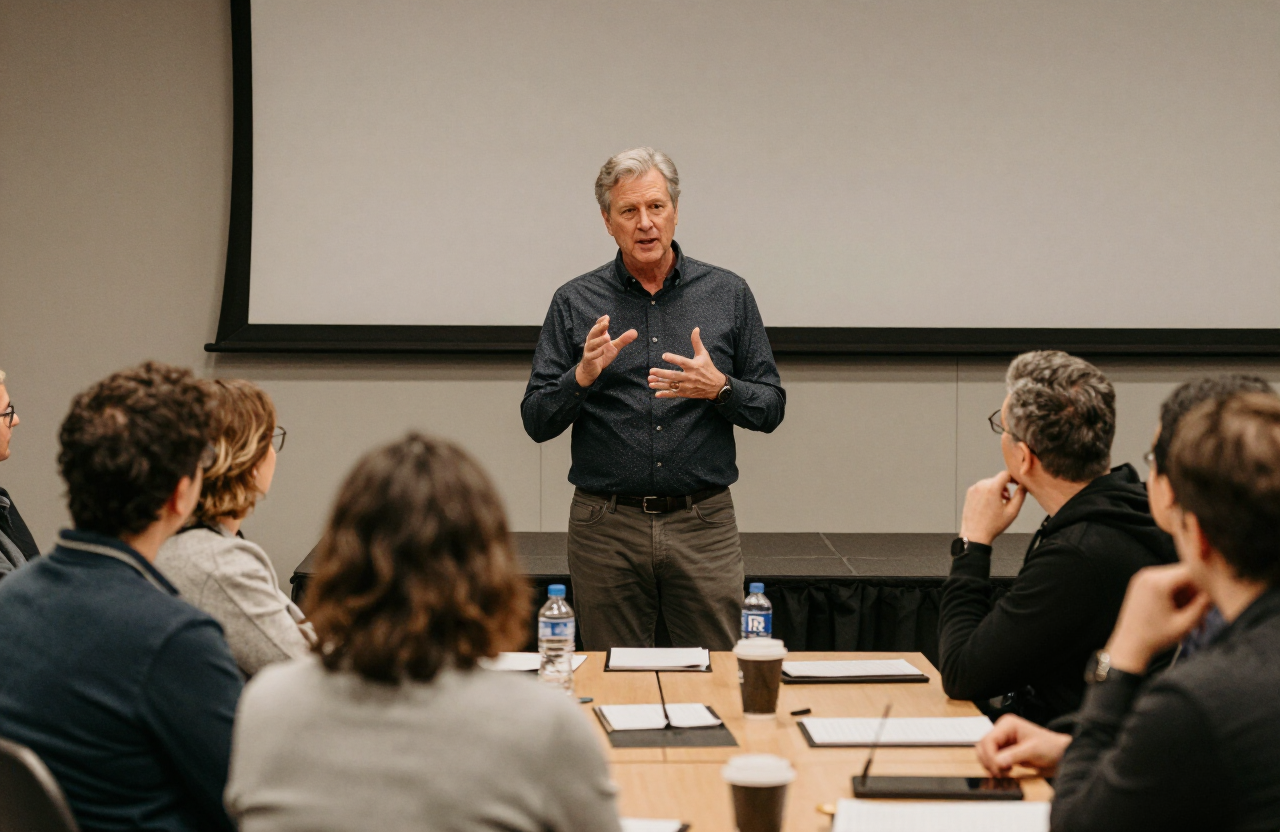
Keith speaks to teams and organizations about creative and innovation work as vocation rather than performance. People in the room tend to leave with fewer excuses and more permission. If your team or organization would like to work with Keith, the details are below — come, call, write.
45–60 minutes
The Call to Create
A talk for conferences, staff gatherings, and church or campus events. The ache to make, named out loud, and what it asks of an ordinary week.
Half day, up to 30 people
Stop Performing, Start Abiding
A working session for creative teams. We take apart the flinch, look at how review culture shapes the work, and rebuild a way of making that survives Monday.
Two half-day sessions
The Middle Part Nobody Sees
For leaders of creative organizations: protecting the space between the financial plan nobody sees and the work out in the world everybody judges.
Sandbox
Other created things.
More writing, song projects, maybe a short film. Newest entries sit at the top; everything older slides down and stays.
The sandbox is a running collection of Keith Vest's side work — essays and notes, song projects, the occasional short film, and other created things that don't fit neatly under the book or the speaking page. New entries appear at the top of the list on the live page, and everything older slides down and stays.
Browse the latest entries on the live sandbox page, where each piece opens to its full text, images, and links.
About
Keith Vest
Keith is a designer and creative leader who has spent more than thirty years making things for a living — and a good many of those years learning to stop managing his creative instincts and start letting them lead.
He co-founded The Variable, a creative agency in Winston-Salem, where his best work fits between the financial plan nobody sees and the work out in the world everybody judges.
At fifty-five he took up the upright bass. He is still not very good at it, and he keeps going back to jam camps in the Carolina mountains anyway. He and his wife and their three kids live in North Carolina.
- Based in
- Winston-Salem, NC
- Co-founder
- The Variable
- Currently learning
- Upright bass
In the studio, next to the bass he is still not very good at.
Contact
Come, call, write.
Get in touch with Keith about speaking, a workshop, leadership training, or The Call to Create. Send a note with the details and you'll hear back to confirm a time.
What you can write about: Speaking, a workshop, leadership training, about the book, or something else.
Booking a time: Keith is available Tuesday through Thursday, 10 am – 4 pm ET. Pick a preferred date and time, and a backup, and he'll confirm.
Use the contact form on the live page to send your note and choose a time, or reach out directly from Winston-Salem, North Carolina.